
Knee pain due to tendinitis

What is

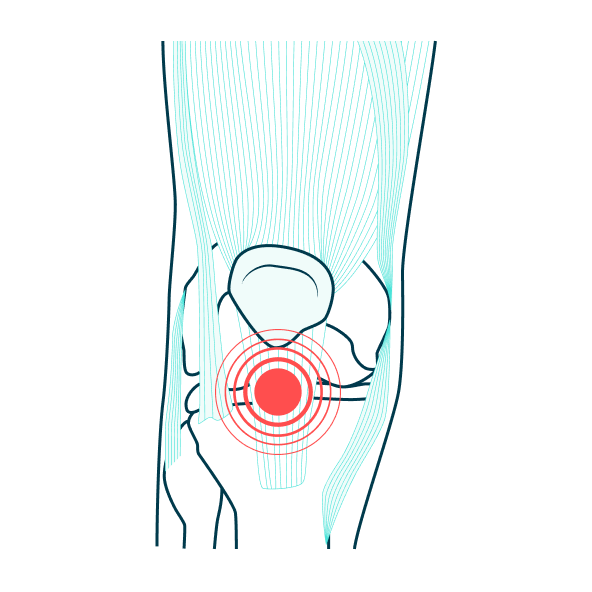
Knee tendonitis is the degeneration of the system that allows the insertion of the muscles (the tendon) into the bones in this joint. Overuse of the muscles leads to continuous wear and tear leading to deterioration of this structure. Usually the development of these injuries is slow and can lead to partial or total tendon rupture, so it is important to act as soon as possible on the factors that lead to this deterioration.
Causes

There are several factors that increase the risk of developing knee tendinitis, although it generally arises from a combination of several factors. Below, we will review the most important ones:

  • Obesity: given its key location in the legs, this joint is directly overloaded in situations involving excessive weight.
  • Osteoarthritis: degeneration of the knee “wear and tear” due to age or hereditary factors.
  • Sports such as soccer or basketball.

Type

Tendinitis of the goose foot

This tendon is a structure located on the inner aspect of the knee and includes the insertion of the semitendinosus, rectus abdominis and sartorius muscles. These muscles intervene in part of the movements of hip and knee. It is a very common injury in:

    • People who are overweight because their hips are wider and the pressure on the insertion of the muscles is greater.
    • People with osteoarthritis in which there are compensatory overloads due to osteoarthritis that generate this problem.
    • Athletes, in which inadequate development or incorrect training leads to overloading of this structure and injury to these tendons.

Patellar tendinitis

Injury in the tendon that connects the patella with the tibia. The patellar tendon has a fundamental mission allowing to extend the knee.

Quadricipital tendinitis

Quadriceps tendinitis is the inflammation of the tendon that connects the quadriceps to the patella. This tendon fulfills a fundamental mission connecting the quadriceps with the knee and allowing its extension. The usual cause of this injury is the overload of the tendon and usually appears in the practice of sports that involve repeated impacts such as soccer, basketball…

Symptoms

When we have a tendinitis a pain is manifested in the concrete place that the muscle is inserted in the bone and that can limit the functions of the muscle of which it forms a part. Depending on the area where the tendinitis is located, the pain may be localized in one area or another:

  • Tendinitis of the goose foot: the pain is located in the anterior and internal part of the tibia at knee level, it is also often associated with pain in the territory of the muscles and generally becomes more intense when moving from sitting to standing position.
  • Patellar tendinitis: the pain is produced through daily gestures such as walking, sitting, standing up and is in the area between the patella and the place of insertion with the tibia (shinbone). Generally the pain at the beginning of the process only manifests itself when exercising, however, if it evolves it can already manifest itself at rest and be very incapacitating.
  • Quadricipital tendinitis: the pain is usually present in the upper part of the patella, which is where the tendon is inserted. It can be a problem if it is not treated and the suitable means are put because it can be associated with ruptures of the tendon and calcifications.

Approach protocol

Diagnosis and assessment

A correct medical evaluation by means of a good anamnesis and physical examination will be necessary. The multidisciplinary vision is essential to perform a comprehensive approach (requiring the intervention of professionals in biomechanics, podiatry and physiotherapy), personalized, focused on detecting the factors that lead to tendon overload and assess whether the injury is exclusively a tendinopathy, if there is a rupture or if there are associated calcifications.

Complementary tests

X-ray and/or MRI.

Treatment

Treatments should be multidisciplinary and encompass a spectrum of treatments that focus on correcting the factors that favor tendon wear, treatments that promote tendon recovery and physiotherapy guidelines to strengthen and correct inadequate attitudes.

  • Interventional medical treatments:
    • Treatments such as regenerative medicine (platelet-rich plasma / cytokine-rich serum / stem cells) will reduce pain and promote tendon recovery.
    • Treatments with hyaluronic acid: as well as regenerative medicine, it reduces pain and promotes tendon recovery.
  • Physiotherapy: methodology based on knowledge and clinical reasoning in which, combining manual and invasive techniques and treatments, always associated with cutting-edge technology, allows us to accelerate the recovery process. Other state-of-the-art technology devices include Magnetolith, SIS, focal shock waves and Indiba, among others. This therapeutic combination allows us to activate the patient early to start with a routine and a process of specific therapeutic exercises that allow us to enhance and strengthen the lost functional patterns.

Here begins your life without pain

Our customers say

ALVARO LUCENA NAVARRO
Mohamed Mihamwdi
jose manuel escalona martin
Ha sido una gran alegría el poder disfrutar de las instalaciones del hospital Ochoa en Marbella e ir de la mano del equipo de la unidad del dolor ,encabezada por él magnífico Doctor Don Rubén Algarra,del cual no tengo palabras para expresar mi más sincero agradecimiento desde el día que lo conocí hasta hoy.
Ha sido una gran suerte haber conocido a un profesional de tan gran categoría.
Los resultados han sido siempre los deseados y los tratamientos muy acertados.
Un grandísimo equipo.
Maribel GOMEZ GARCIA
Ana Paula Zaragoza
Magnífica labor de Belén, fisio pediátrica, que ha tratado a mí hijo Iker de una manera excelente y ha conseguido una recuperación estupenda en él. Trato cariñoso, paciente y empático a mi hijo que solo tenía 2 meses y medio cuando empezamos con ella.
Ana Acuña
Maria del Carmen Jurado Cordoba
Pasar por MIVI, con el Dr. Duca, ha sido como renacer. Tras dos infiltraciones, una de ellas en zona sacroiliaca, me ha devuelto la esperanza para poder seguir viviendo con ilusión. Tras unas semanas de la infiltración he podido hacer un viaje a Roma y caminar por sus calles y todo ello sin dolor !!!! Poder dormir en un colchón extraño y no levantarme clavada de ambas caderas, wowww ha sido increíble.
Sobre el doctor Duca os puedo decir que ofrece un trato muy profesional, cercano, muy empático y humano, se ocupó de buscar la mejor solución para mí desde el primer momento, teniendo una mirada amplia sobre toda mi situación general, cosa que agradezco, ya que una mirada amplia es garantía de éxito. No obviar ningún detalle del paciente es primordial, por lo que me sentí muy acompañada, entendida y cuidada con gran profesionalidad.
El personal de quirófano, un 10.
Gracias a todo el equipo de MIVI.
JUANJO CANO
Mi primera sesion.
Muy buen trato y muy buenos profesionales.
Satur HOYOS PINTO
¡Una clínica excelente! Son todos unos profesionales maravillosos, muy competentes y el trato es exquisito, son muy agradables y cariñosos. Se implican personalmente con cada paciente. Muy buen ambiente y buena organización. También el personal de recepción son encantadores y cercanos; te facilitan y ayudan en todo.
Yo ya estuve hace 2 años con una lesión en el hombro y consiguieron recuperarme al 100% y en poco tiempo. Las dos veces llamé y me dieron la cita para las sesiones muy pronto.
La rehabilitadora jefa es una gran profesional con grandes conocimientos. De los fisios, Belén y Fran son magníficos.
Es una clínica altamente recomendable; yo vivo en El Palo, y aunque tengo bastantes clínicas más cerca tengo claro donde voy a seguir viniendo.
toxic

Insurance companies

Ask your MIVI centre for information on the agreements with insurance companies.