
Lumbar girdles: friend or foe? When to use them and when not to use them
Published on:
Last modified:
When low back pain low back pain (low back pain), it is very common to think of a quick solution: “I’ll put on a lumbar support and that’s it. And, in some cases, it can help… but in others it can become a band-aid that delays recovery.
The right question is not whether the lumbar girdle is good or bad, but: for whom, for what and for how long..
In this article we explain when to use a lumbar supportwhen to avoid it and how to integrate it (if necessary) in a more complete recovery plan.
What is a lumbar support belt and what does it really do?
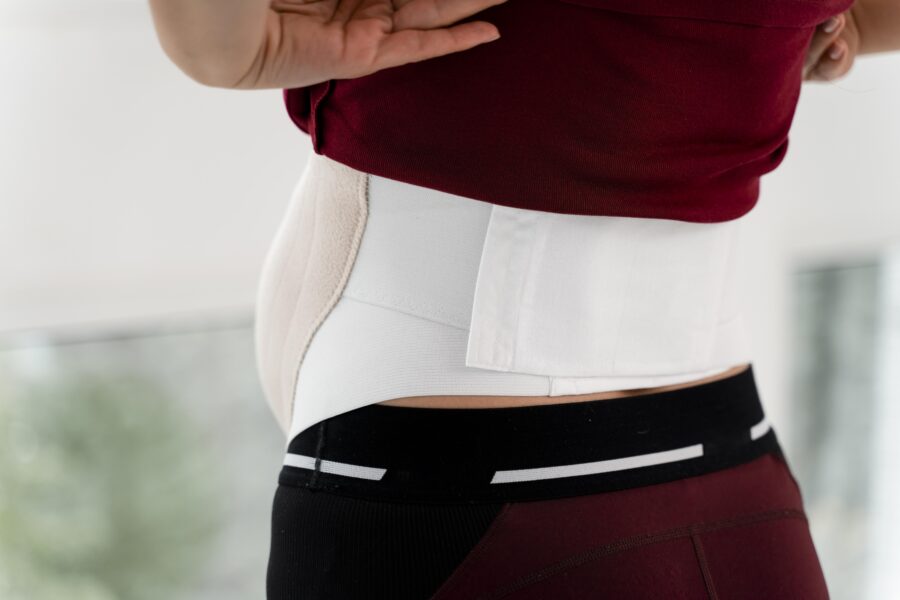
A lumbar belt is a support device that surrounds the lower back and abdomen. Depending on the model (elastic, semi-rigid, rigid) it can:
- give feeling of support,
- limit some movements (especially flexion/extension),
- increase abdominal pressure and generate a slight stabilization stabilization,
- help to “remember” to maintain more careful postures.
But it is important to understand: it does not “cure” a hernia, it does not reposition vertebrae, it does not eliminate the cause of the pain.. At best, it is a temporary support tool.
Lumbar belts: friend or foe?
They can be “friends” if…
They are used judiciously, for a specific reason and for a limited time.
They can be “enemies” if…
They become the main solution, are worn for weeks without a strengthening plan or reinforce the fear of movement (“without a girdle I can’t do anything”).
Conclusion: lumbar support can help, but should not replace movement, therapeutic exercise and medical management when necessary. when necessary.
When to use lumbar support: situations in which it may be indicated
1) Episode of acute low back pain with punctual limitation.
If you are at a peak of pain and need to do basic tasks (going out, walking, moving around), the girdle can provide security and tolerance for 1-3 days.
2) Punctual work with unavoidable loads or stresses.
In specific cases (for example, a day with specific efforts that you cannot avoid), it can be used as a support only during that activity. only during that activity. Especially if your doctor or physical therapist recommends it.
3) Postoperative or specific medical indication
After certain procedures or surgeries, a specific girdle may be indicated with a clear objective and a defined time frame.
4) Instability or specific pathology under supervision.
In selected situations, it can be part of the treatment. Here it should always be decided by a professional after assessment.
When NOT to use a lumbar support (or when to avoid prolonged use)
1) If you use it all day “just in case”.
Wearing a back brace as a daily habit without indication can make the body dependent on that feeling of support.
2) If you are stopping moving out of fear.
Recovery from low back pain usually improves with adapted activity and progressive. If the girdle feeds the “I can’t move without this,” it’s usually a bad sign.
3) If you use it as a substitute for fortification.
The basis of relapse prevention in low back pain is usually:
- trunk and hip strength,
- motor control,
- mobility,
- load habits and ergonomics.
The girdle does not replace any of that.
4) If it is too tight or increases symptoms
A very tight girdle may be uncomfortable, restrict breathing or increase abdominal pressure. If you notice worsening, it should be checked.
How long to wear a lumbar support brace?
In general, if indicated for acute low back pain, it is ideal:
- occasional useduring the activity that requires it,
- y phasing out in a few days.
As a practical reference: avoid using it for more than 1-2 weeks unless specifically indicated by a physician, and always accompanied by a recovery plan.
(The exact time varies depending on the case, diagnosis and type of girdle).
Types of lumbar support braces: which one to choose if recommended
Without going into brands, there are usually three main categories:
- Elasticlight support, useful for a sense of stability in light frames or as a punctual support.
- Semi-rigidmore support, limit movement more, indicated in some specific cases.
- Rigid: more restricted indication, normally under medical criteria (postoperative or specific situations).
Important: choosing “the stiffest” does not mean choosing “the best”. The right girdle is the one that fits the clinical objective and the time of use.
More effective medium-term alternatives for low back pain
If your goal is to improve and prevent relapses, what usually makes the difference is:
- Progressive therapeutic exercise (core, gluteus, hip, back)
- Walking and daily mobility mobility (adapted to pain)
- Education to understand pain and reduce fear of movement
- Medical treatment of pain when necessary to allow activity
- In selected cases: interventional techniques (if indicated)
The brace may be a temporary support, but real recovery usually comes from regaining function and confidence in movement. function and confidence in movement.
Warning signs: when to consult with priority
Consult a professional if it appears:
- loss of strength in one leg,
- sphincter alteration,
- numbness in the perineal area,
- fever, unexplained weight loss,
- persistent pain that does not improve in weeks.
Summary: lumbar support, yes, but judiciously.
- Yes to the lumbar support belt for occasional support (acute peak, specific activity, postoperative or medical indication).
- No as a permanent or “cure-all” solution, especially if it replaces movement and strengthening.
- If you have any doubts, the ideal is an assessment to define the origin of the low back pain and the treatment plan.
Author
Pain Unit – MIVI Málaga | MIVI Salud