Treatment of Osteoarthritis and Tendinopathies with PRP: A Paradigm Shift

Published on:
Last modified:
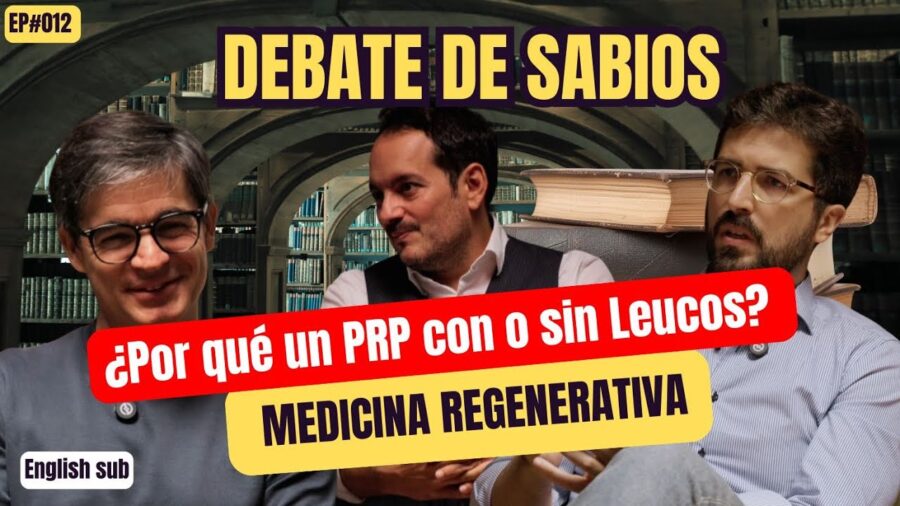
In this new episode of ” Pirates of Pain,” our Medical Director, Dr. Jorge Orduña, joins Drs. Jordi Recasens and Guillerme Ferreira to explore the practical application of platelet-rich plasma (PRP) in treating common conditions such as osteoarthritis of the knee, hip, and shoulder, as well as tendon injuries.
Orthobiological medicine is not just an alternative, but a necessity for patients who seek to treat the cause of their pain rather than merely provide temporary relief from symptoms.
The End of the Era of Cumulative Corticosteroid Use
One of the key messages conveyed by our Medical Director, Dr. Jorge Orduña, is the importance of avoiding the side effects of corticosteroids. Cartilage damage, high blood pressure, and an increased risk of infection are real risks that depend on the total cumulative dose.
Unlike corticosteroids, PRP can be repeated with virtually no side effects, making it an ideal tool both for slowing the progression of the disease and for improving the patient’s quality of life while awaiting surgery.
PRP for the Knee, Hip, and Shoulder: What to Expect?
-
Knee and Hip: PRP offers the greatest benefit in the early stages (Grades 1 and 2). It is the preferred option of our Medical Director, Dr. Jorge Orduña, over hyaluronic acid in patients with early-stage degeneration. Furthermore, in the preoperative phase, PRP helps reduce pain and allows for more effective preoperative rehabilitation without increasing the risk of infection during the subsequent surgery.
-
Shoulder: Here, the condition is usually more closely related to the tendons (rotator cuff) than to pure glenohumeral osteoarthritis. PRP has shown excellent results in chronic supraspinatus tendinopathies, especially when the “biological reset” technique is used with leukocyte-rich plasma.
Tendinopathies: The “Ideal Patient”
The patient profile that responds best to PRP treatment is that of a young, active individual with chronic tendinopathy (in the elbow, knee, or heel) without a complete tear. The goal is to stimulate the proliferative phase of tissue repair.
For this treatment to be successful, our Medical Director, Dr. Jorge Orduña, emphasizes that it must always be accompanied by a structured therapeutic exercise program. The tendon needs controlled loading and movement to heal; complete rest is no longer the standard recommendation.
Innovations: Intraosseous Injections
One of the most interesting areas of research mentioned in the episode is intraosseous injection. Directly treating the subchondral bone (the bone directly beneath the cartilage) when there is edema or bone stress may be the key to improving the clinical response in patients for whom conventional intra-articular injections fall short.
Conclusion
Pain medicine is evolving toward protocols in which the most important factor is not the number of injections, but rather the biological dose administered and millimeter-level precision achieved through ultrasound or fluoroscopic guidance. As our Medical Director, Dr. Jorge Orduña, understanding these nuances is what makes the difference between temporary relief and real, lasting improvement.