
Dorsal Myofascial Syndrome

What is

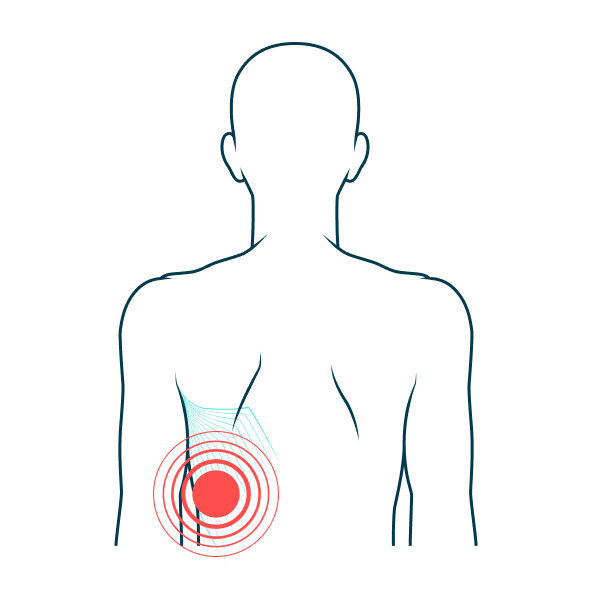
The myofascial syndrome of the dorsal region is a picture of muscle pain sustained over time caused by persistent contracture of a muscle or muscle group. This is, among all, the most frequent cause of pain in the dorsal region.

This contracture is characterized by presenting as a tense, palpable band in the muscle (the contracture), which presents increased consistency and which when pressed produces pain in the area of the contracture or in the path of the muscle.
Causes

Generally this type of contracture is triggered as a consequence of overloads produced by other situations such as degeneration and deterioration of the intervertebral disc, a herniated disc or a facet syndrome among others. Other factors such as inadequate postures, traffic accidents or some jobs with inadequate habits can produce them.

Symptoms

  • Pain in the area of muscle contracture.
  • Distant and distant pain from the contracted area
  • Contracture with limitation of mobility

Approach protocol

Diagnosis and assessment

A correct medical evaluation will be necessary by means of a good anamnesis, physical examination and, if necessary, support of imaging tests, focusing especially on detecting the origin and cause of the pain.

Complementary tests

An MRI and/or CT scan may be performed to assess whether there are lesions in discs or joints that are the cause of this persistent muscle contracture.

Treatments

  • Non-interventional treatment: treatment of existing lesions in the discs or adjacent joints that produce and/or promote muscle contracture. This will allow the results obtained to be prolonged in time.
    • Therapeutic exercise: active physiotherapy treatments in which the muscles responsible for protecting the area are developed.
    • Physiotherapy: methodology based on knowledge and clinical reasoning in which we combine a series of techniques and treatments both manual therapy and invasive techniques, always associated or complementing them with cutting-edge technology that allows us to accelerate the recovery process. Among other high-tech devices include Magnetolith, SIS, focal shock waves, Indiba, among others. This therapeutic combination allows us to activate the patient early to begin with a routine and a process of specific therapeutic exercises that allow us to enhance and strengthen the lost functional patterns.
  • Interventional treatments:
    • Ultrasound-guided blockade of fascial planes
    • Botulinum toxin treatments
    • Ozone treatments

Here begins your life without pain

Our customers say

elena casado gomez
Paula y Silvia buenisimas recepcionistas, super amables y atentas!! :)
Carlos Luzón
FRANCISCO DUCA Y SU EQUIPO SON LOS MEJORES QUE ME HAN TRATADO
Marc Guerrero
Muy buena experiencia, buen doctor
Janira Arnedo
Juan Carlos
Llegué con el hombro derecho bastante mal.
Tenía rotura parcial del tendón, bursitis y capsulitis. Llevaba meses casi sin dormir.
Gracias a ellos he pasado por 3 pequeñas intervenciones ambulatorias de quirófano y se me ha quitado el dolor.
Con el trabajo fantástico del personal de fisioterapia, a día de hoy he recuperado casi la totalidad del movimiento del hombro.
Mi agradecimiento a todo el personal que me ha tratado con toda la profesionalidad y el buen hacer de su profesión.
Muchas gracias.
Víctor de Minteguia Crespo
Miriam Diaz
Excelente trato
Oscar
Increíble como estaba de dolores desde que me levantaba y como estoy ahora después de una filtración. Encantado y muchísimas gracias a mivi y al dc. Duca!! Espectacular!!
Elena Trujillo Trujillo
Atendimiento excelente
Santi Gutti
Muy amable simpática y trabajadora.

Insurance companies

Ask your MIVI centre for information on the agreements with insurance companies.