
Migraine
What is
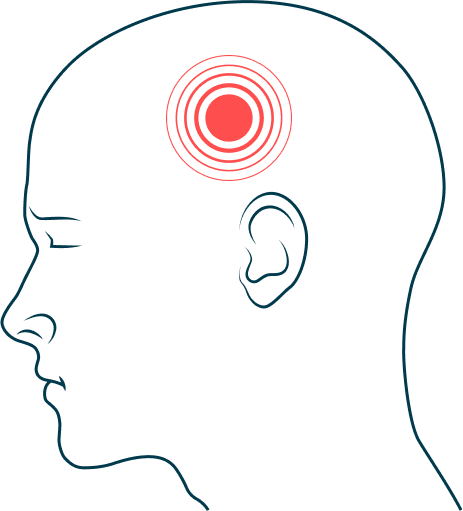
Migraine is a form of cephalalgia (headache) that usually manifests itself in an intense and disabling way. In addition, it is usually accompanied by other manifestations such as vomiting, intolerance to light, sound, among others. The pain is usually located in the frontal or lateral part of the head, it is usually recurrent (episodic), throbbing and affects one part of the head with more intensity.
Migraine attacks can last from a few hours to days and the pain can be so intense that it prevents daily activities.
Some people experience a symptom other than a headache that serves as a warning of the onset of a headache and is known as an aura. These symptoms may include visual perceptions such as flashes of light or black spots, sensory sensations such as tingling sensations perceived on one side of the face, on an arm or leg, and even slurred speech.
Causes
The origin of this type of pain is a combination of factors. It has been shown that in some families it is especially frequent, so there is undoubtedly a hereditary component. Mood changes such as stress, anxiety, depression, lack of sleep, alcohol consumption, caffeine, saccharines such as aspartame or monosodium glutamate, seasonal changes or exposure to intense sensory stimuli may be some of the factors that cause this pain.
Type
Migraine without aura
Very intense pain with the following characteristics:
- The pain usually manifests itself on one side of the head, (although it may spread globally).
- It is frequently pulsatile.
- It can be felt in the neck, jaw and face.
- It may be accompanied by intolerance to light, noise and odors.
- It usually appears spontaneously and generally lasts from hours to less than three days.
- Doing sports makes it worse.
Migraine with aura
It is distinguished from migraine without aura by the appearance of symptoms that affect vision, language…
They usually appear before the pain, serving as a predictor of the crisis. Types of aura manifestations:
- Visual aura (luminous flashes in the form of flying flies)
- Sensitive aura
- Aura of language
Menstrual migraine
Related to the hormonal changes of menstruation. It usually starts with the first period, although it may change with pregnancy or menopause. Treatments such as the contraceptive pill may worsen the pain.
Symptoms
Symptoms can be episodic when they last less than 15 days or chronic when the pain is present for more than 15 days per month.
Migraines can present themselves in many different ways, although in their most typical form it is normal for the patient to go through four stages:
Prodromal phase
It is not always present, but usually appears one to two days before the migraine.
Typical symptoms include:
- Mood changes
- Food cravings
- Sensation of stiffness in the neck
- Constipation
- Increase in the number of micturitions (the number of times urinating)
Aura phase
Aura is a reversible symptom of the nervous system that generally precedes the migraine and is usually visual, although it can also be perceived as tingling sensations in an arm or leg or alterations in speech.
Attack phase
Attack phase
A migraine can last from 4 hours to several days if left untreated. The frequency with which they occur varies from person to person.
During this phase of attack the most frequent symptoms are:
- Pain (most often) on one side of the head, but may occur on both.
- Throbbing pain in the head.
- Extreme sensitivity to sounds, smells and light.
- Nausea and vomiting.
Postdromic phase
This is the phase that follows a migraine attack, and usually manifests as extreme tiredness present during the hours following the migraine.


Our customers say


Insurance companies
Ask your MIVI centre for information on the agreements with insurance companies.