

Wrist Arthrosis (Rizarthrosis)
What is
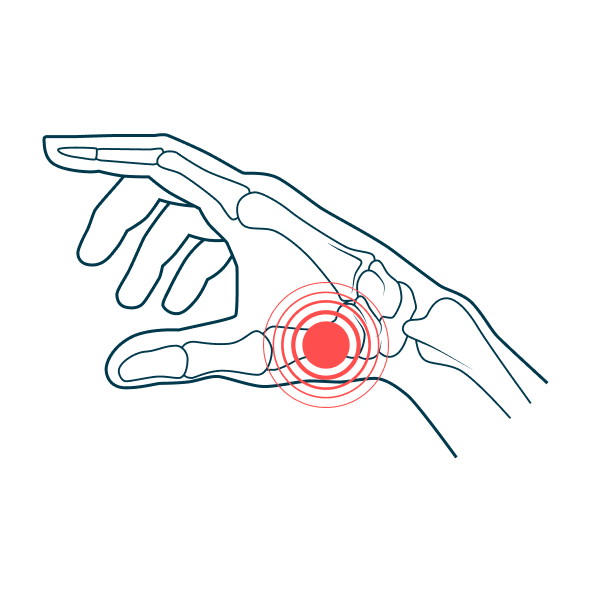
The rhizarthrosisalso known as osteoarthritis of the wristis a degenerative pathology that mainly affects the base of the thumb. base of the thumb. It is produced by the progressive wear of the articular cartilage in this area, which generates pain, stiffness and difficulty in performing movements involving the use of the hands.
The development of rhizarthrosis is usually slow and progressive. slow and progressivebeginning with mild discomfort that intensifies over time, especially when performing everyday activities such as opening a jar, turning a key or writing. As the disease progresses, loss of mobility and functional limitation can significantly interfere with quality of life.
When we speak of rhizarthrosis, we refer specifically to osteoarthritis affecting the trapeziometacarpal joint. trapeziometacarpal joint (between the trapezium and the first metacarpal). (between the trapezium and the first metacarpal bone), although in more advanced cases the trapeziometacarpal joint may also be involved. trapezioscaphoid joint can also be involved.
This degeneration of articular cartilage cannot be cured, so the therapeutic approach is based on slowing its progressionand and providing optimal conditions to preserve the functionality of the hand for as long as possible. functionality of the hand for as long as possible.
Causes
The main causes and risk factors for rhizarthrosis are:
-
- Advanced age
- Genetic background
- Predisposition in women
- Rheumatoid arthritis
- Repetitive movements
- Obesity
- Sedentary lifestyle
Symptoms
The most common are continuous pain at the base of the thumb and loss of strength and/or difficulty in performing many of the activities of daily living (opening a bottle, writing, opening a door, cutting with scissors, holding a glass, tonging…). These symptoms may be accompanied by swelling, deformity and the presence of clicking or popping noises on movement. In more advanced stages, the shape of the hand will be affected, the thumb tends to close, making hand motricity even more difficult, and the pain may disappear or diminish. The condition may present with periods of increased pain (nocturnal and even at rest) that are more inflammatory (arthritis or synovitis).
- Pain in the area that is no longer protected due to cartilage wear.
- The crunching sounds that occur when the joint wears out.
- The effusion that produces inflammation that is triggered in an unprotected joint.
- The increase in size of the joint caused by the growth of bones that are no longer protected by cartilage collide.
- Decreased mobility.


Our customers say


Insurance companies
Ask your MIVI centre for information on the agreements with insurance companies.