
When is it necessary to operate on a herniated disc? Current medical criteria

Published on:
Last modified:
The word “herniated disc” is frightening. And it is normal: it is usually associated with intense pain, sciatica, limitation and, many times, an automatic idea: “I’m going to have to have surgery”.
But the current clinical reality is different: the majority of herniated discs do not require surgery and improve with well-indicated conservative management.
In this article we explain when it is necessary to operate a herniated discwhat are the current current medical criteriawhat signs indicate urgency and what options are available before going to the operating room.
When to operate a herniated disc? Current medical criteria | MIVI Salud
Find out when it is necessary to operate on a herniated disc: symptoms, current medical criteria, warning signs (cauda equina, neurological deficit), timing and alternatives.
What is a herniated disc and why does it not always hurt?
Between the vertebrae there are intervertebral discs that act as shock absorbers. We speak of herniated disc when part of the disc is displaced and can irritate or compress irritate or compress a nerve root.
Key points (very important to understand the treatment):
- You can have a herniated disc on an MRI scan without pain.
- You can have low back or neck pain without a herniated disc.
- What guides medical decisions is not only the image, but also the clinical clinical (symptoms) + neurological examination + evolution..
Is it necessary to operate a herniated disc? Most frequently: no
In current medical practice, surgery is reserved for specific situations. In most cases, conservative treatment is prioritized because:
- many pictures improve within weeks,
- pain can be controlled without surgery,
- and operating without clear criteria brings no benefit (and risks).
Simply put: you trade when the risk of not trading is greater than the risk of trading..
Current medical criteria for herniated disc surgery
1) Urgent surgery: cauda equina syndrome.
It is the most important scenario and requires immediate attention. It may present with:
- loss of sphincter control (urine or stool),
- numbness in the perineal area (“saddle”),
- marked weakness in legs,
- bilateral pain or progressive neurological symptoms.
In this case, there is no waiting: priority action is taken because time influences neurological recovery.
2) Progressive neurological deficits (loss of strength).
If the herniated disc causes weakness (e.g., “I drop my foot,” “I can’t lift my toe,” obvious loss of strength in a muscle) and that weakness is progressive or significant, surgery may be indicated.
Here the criterion is clear: the objective is not only to soothe painbut to to protect the nerve.
3) Disabling pain that does not improve with conservative treatment.
This is the most common scenario when surgery is planned on a scheduled basis:
- Severely limiting pain (low back, cervical, sciatica or brachialgia)
- No improvement after a reasonable period of well-conducted non-surgical treatment
- And with correlation between symptoms, examination and imaging findings.
The “reasonable time” varies from case to case, but is generally considered to be between 6 to 12 weeks (or earlier if the disability is extreme and persistent). The final decision must always be individualized.
4) Frequent recurrences with great functional impact.
In some individuals, the episodes recur frequently, result in prolonged sick leave and deteriorate quality of life, despite proper treatment. In these cases, surgery may also be considered, especially if there is a clear clinical pattern and concordant evidence.
Difference between lumbar disc herniation and cervical disc herniation
Lumbar disc herniation
It usually manifests itself as:
- lumbar pain,
- sciatica (pain that goes down the buttock and leg),
- tingling, cramps or loss of sensation,
- sometimes loss of strength.
Surgery is proposed mainly for neurological deficit o persistent disabling sciatica.
Cervical disc herniation
May cause:
- cervical and arm pain (brachialgia),
- tingling in hand,
- loss of strength,
- and in some cases signs of spinal cord involvement (myelopathy).
If there is spinal cord compression or symptoms compatible with myelopathythe approach is usually a higher priority.
What options are available before operating on a herniated disc?
For many patients, the right path is not to “tough out” the pain, but to follow a well-structured plan. Depending on the case, it may include:
- Education and control of fear of movement
- Physiotherapy and therapeutic exercise (progressive and specific)
- Analgesia according to medical criteria
- Infiltrations or interventional techniques in selected cases (with Local Anesthetics and Corticoids, Ozone, Platelet Rich Plasma -PRP-, Laser, etc.).
- Rehabilitation aimed at recovering function and preventing relapses.
A key point: If pain prevents you from moving, sleeping or workingIt is not necessary to chronify it. There are medical options to improve pain control and facilitate functional recovery.
What evidence is needed to decide?
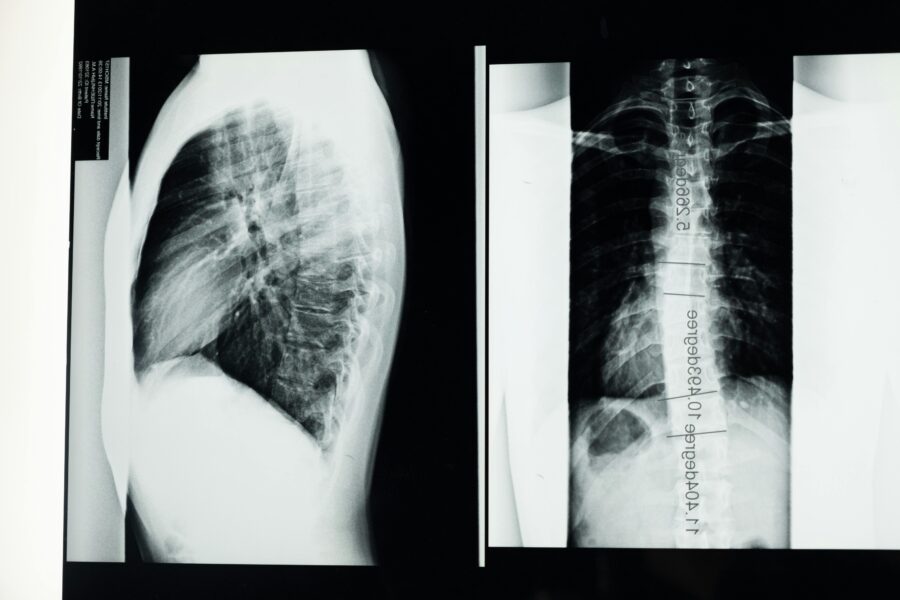
MRI and radiography are useful tools” and details “Imaging (maximum extension and flexion CXR, Nuclear Magnetic Resonance Imaging) when indicated:
- Medical history (type of pain, irradiation, limitation)
- Neurological examination (reflexes, sensitivity, strength).
- Time evolution
- Imaging (MRI) when indicated
- Real functional impact on daily life
Summary: when is it recommended to operate on a herniated disc?
Surgery is considered when:
- There is cauda equina syndrome (urgency).
- There is significant or progressive progressive loss of strength.
- There is disabling pain that does not improve after adequate conservative treatment.
- There is recurrences with great functional impact and concordant clinical criteria.
In most cases, herniated discs are initially managed without surgery. without surgerywith an appropriate medical and rehabilitative approach.
Author
Dr. Nicolás Sarriá
Pain Unit – MIVI Málaga | MIVI Salud