

How does the soul hurt? The invisible impact of mental health on the chronic pain patient.
Published on:
Last modified:
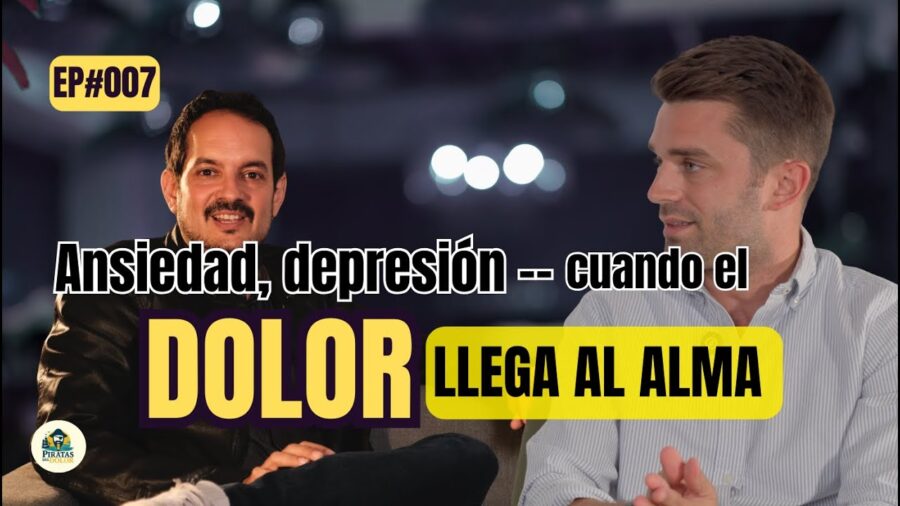
Our Medical Director, Jorge Orduña, tells us today in his podcast Pirates of Pain the keys to one of the most profound and often silenced dimensions of medicine: mental health in patients living with persistent pain. In this episode, Dr. Orduña talks with Dr. Alejandro Fuertes, a psychiatrist trained at the prestigious Massachusetts General Hospital of Harvard University and an expert in neuromodulation, to explain how physical pain and emotional suffering are, in reality, two sides of the same coin.
Below, we analyze the fundamental points of this meeting, which are essential to understand that treating pain effectively necessarily involves taking care of the mind.
1. Mourning for lost identity
When pain becomes chronic, the damage transcends the physical. Dr. Fuertes explains that there is a real mourning for the life the patient had planned and which has been cut short. This traumatic experience not only limits movement, but also modifies the person’s identity: many patients end up merging their “self” with their disease, ceasing to be individuals and becoming “pain patients”. Professional accompaniment at this stage is vital to help rebuild a new life purpose.
2. The neurobiology of suffering: Anxiety, depression and insomnia.
There is a physical and inseparable connection between the brain circuits that process pain and those that regulate our emotions. For this reason, chronic pain is usually accompanied by three major players:
-
Anhedonia: The inability to enjoy the little things that used to bring pleasure.
-
Basal Anxiety: A feeling of constant alertness, as if the body were in permanent danger, which prevents any real relaxation.
-
Isolation as a refuge: The fear of not being able to fulfill plans due to unpredictable peaks of pain leads the patient to seclude himself, narrowing his social and emotional world.
3. The urgency of time: Arrive earlier to treat better.
Jorge and Alejandro agree on a critical diagnosis of the current healthcare system: we are late. While in private healthcare access to a specialist can be agile, waiting lists of months or even years in the public system chronicle suffering. Dr. Fuertes warns that the more time the brain spends processing pain and depression, the more it “learns” to suffer, creating flawed neural circuits that are much more difficult to reverse.
4. Demystifying treatment: Neither “zombies” nor stigmas.
One of the great values of this episode is the demystification of modern psychiatry:
-
Antidepressants vs. anxiolytics: Dr. Fuertes clarifies that antidepressants, if properly prescribed, do not generate addiction or incapacitating sedation. On the contrary, they are the tool that “opens the door” for the patient to regain functionality.
-
Professional synergy: Psychologist and psychiatrist are not mutually exclusive options. The former helps identify dysfunctional thought patterns, while the latter balances the brain biology necessary for such therapy to be effective.
5. The cutting edge: Neuromodulation and the future of hope.
The talk concludes with a hopeful look at the new technologies that are already a reality in the practice:
-
Transcranial Magnetic Stimulation (TMS): A powerful, non-invasive technique that uses electromagnetic pulses to “rewire” the brain, restructuring neural networks and restoring lost balance.
-
TDCS (Direct Current Stimulation): Portable devices that the patient can use even at home to modulate pain perception and improve sleep quality.
The final message of Dr. Orduña and Dr. Fuertes is a vindication of the real biopsychosocial approach. Treating pain is not just about prescribing an analgesic; it is about integrating the family, assessing the social environment, taking care of sleep hygiene and, above all, acting early. Only through empathetic and multidisciplinary medicine can we prevent pain from defining our patients’ lives.