
EPI® with ultrasound guidance: advanced treatment for chronic tendinopathies
Published on:
Last modified:
What Is Ultrasound-Guided EPI?
Percutaneous Intratissue Electrolysis (EPI®) is an invasive physical therapy technique used to treat chronic tendinopathies and degenerative tendon injuries.
It involves applying a galvanic current through a needle directly to the injured tissue.
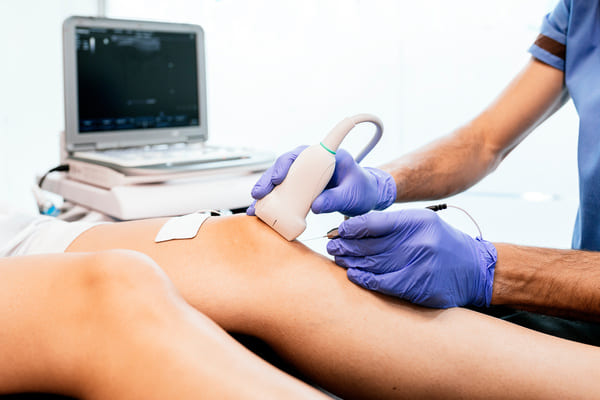
When performed under ultrasound guidance, the accuracy is much higher, since the physical therapist can clearly see the injured area.
What types of injuries are treated with EPI?
EPI is frequently used in:
– patellar tendinopathy
– Achilles tendinopathy
– epicondylitis (tennis elbow)
– rotator cuff injuries
– plantar fasciitis
– muscle fibrosis
These injuries usually result from repetitive strain or tissue degeneration.
How EPI Affects the Tendon
The current delivered through the needle triggers a controlled inflammatory response.
This process stimulates:
· tendon regeneration
· the removal of degenerated tissue
· the synthesis of new collagen
As a result, the tissue gradually regains its functional capacity.
PPE + therapeutic exercise
To achieve lasting results, PPE must be combined with:
· eccentric exercise
· muscle strengthening
· load control
This approach helps restore tendon function and reduce the risk of recurrence.
Frequently asked questions:
Does EPI hurt?
It may cause some discomfort during the session, but it is usually tolerable.
How many sessions are needed?
Usually between 3 and 6 sessions.
Does EPI replace surgery?
In many cases, yes—it can help avoid surgical treatments.
Author: Hugo Quintana
Director of MIVI Advanced Physical Therapy