

Knee pain due to tendinitis
What is
Knee tendonitis is the degeneration of the system that allows the insertion of the muscles (the tendon) into the bones in this joint. Overuse of the muscles leads to continuous wear and tear leading to deterioration of this structure. Usually the development of these injuries is slow and can lead to partial or total tendon rupture, so it is important to act as soon as possible on the factors that lead to this deterioration.
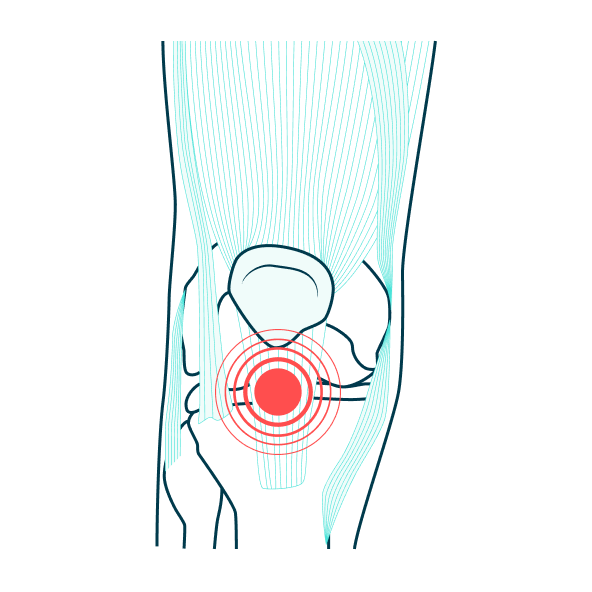
Causes
There are several factors that increase the risk of developing knee tendinitis, although it generally arises from a combination of several factors. Below, we will review the most important ones:
- Obesity: given its key location in the legs, this joint is directly overloaded in situations involving excessive weight.
- Osteoarthritis: degeneration of the knee “wear and tear” due to age or hereditary factors.
- Sports such as soccer or basketball.
Type
Tendinitis of the goose foot
This tendon is a structure located on the inner aspect of the knee and includes the insertion of the semitendinosus, rectus abdominis and sartorius muscles. These muscles intervene in part of the movements of hip and knee. It is a very common injury in:
-
- People who are overweight because their hips are wider and the pressure on the insertion of the muscles is greater.
- People with osteoarthritis in which there are compensatory overloads due to osteoarthritis that generate this problem.
- Athletes, in which inadequate development or incorrect training leads to overloading of this structure and injury to these tendons.
Patellar tendinitis
Injury in the tendon that connects the patella with the tibia. The patellar tendon has a fundamental mission allowing to extend the knee.
Quadricipital tendinitis
Quadriceps tendinitis is the inflammation of the tendon that connects the quadriceps to the patella. This tendon fulfills a fundamental mission connecting the quadriceps with the knee and allowing its extension. The usual cause of this injury is the overload of the tendon and usually appears in the practice of sports that involve repeated impacts such as soccer, basketball…
Symptoms
When we have a tendinitis a pain is manifested in the concrete place that the muscle is inserted in the bone and that can limit the functions of the muscle of which it forms a part. Depending on the area where the tendinitis is located, the pain may be localized in one area or another:
- Tendinitis of the goose foot: the pain is located in the anterior and internal part of the tibia at knee level, it is also often associated with pain in the territory of the muscles and generally becomes more intense when moving from sitting to standing position.
- Patellar tendinitis: the pain is produced through daily gestures such as walking, sitting, standing up and is in the area between the patella and the place of insertion with the tibia (shinbone). Generally the pain at the beginning of the process only manifests itself when exercising, however, if it evolves it can already manifest itself at rest and be very incapacitating.
- Quadricipital tendinitis: the pain is usually present in the upper part of the patella, which is where the tendon is inserted. It can be a problem if it is not treated and the suitable means are put because it can be associated with ruptures of the tendon and calcifications.


Our customers say


Insurance companies
Ask your MIVI centre for information on the agreements with insurance companies.