

Postural Ergonomics: How to Avoid Lower Back Strain If You Work Long Hours Standing Up
Published on:
Last modified:
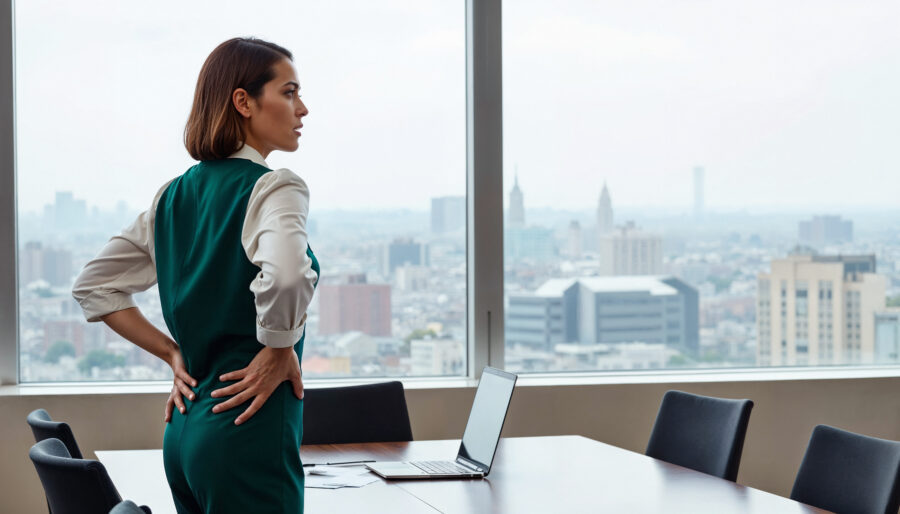
Spending many hours standing may seem less harmful than sitting, but the reality is that maintaining a standing posture for long periods can also place significant strain on the lumbar spine, the pelvis, and the back muscles.
Jobs such as healthcare workers, retail clerks, hairdressers, cooks, teachers, and industrial workers often require long hours of standing, which can lead to lower back pain, muscle stiffness, and physical fatigue.
The good news is that small changes in posture and daily habits can help prevent lower back strain and reduce the risk of chronic pain.
Why does my back hurt when I stand for many hours?
When we stand for long periods of time, the lower back and abdominal muscles must work continuously to maintain the body’s stability.
Over time, this can lead to:
- Muscle fatigue.
- Lower Back Strain.
- Stiffness.
- Muscle spasms.
- Mechanical pain.
- Overuse of the facet joints.
In addition, poor posture or muscle weakness can put even more pressure on the discs and joints.
Common Symptoms of Lower Back Strain
People who work long hours on their feet often describe:
- Lower back pain.
- A sensation of heaviness in the lower back.
- Stiffness at the end of the day.
- Muscle fatigue.
- Discomfort when walking or standing still.
- A sensation of stiffness in the lower back.
- Pain that improves with rest.
In some cases, pain may also radiate to the buttocks or legs.
Factors That Increase Lumbar Strain
There are several factors that contribute to lower back pain during prolonged periods of standing at work:
- Poor posture.
- Sedentary lifestyle.
- Abdominal and lower back weakness.
- Inadequate footwear.
- Lack of breaks.
- Overweight.
- Repetitive movements.
- Hard surfaces.
- Sustained physical stress.
Often, the problem isn’t just about how many hours you spend on your feet, but how your body handles that strain.
What is postural ergonomics?
Postural ergonomics involves adapting habits, movements, and the work environment to reduce strain on muscles and joints.
Its goal is:
- Improve your posture.
- Reduce mechanical stress.
- Reduce the risk of injury.
- Promote a better distribution of loads.
When it comes to the lumbar spine, applying ergonomic principles can significantly help prevent chronic pain.
Tips for Avoiding Lower Back Strain
1. Avoid staying completely still
Staying still for hours increases muscle fatigue.
It is recommended that:
- Change your support frequently.
- Take small steps.
- Move your legs periodically.
- Vary your posture.
Movement helps reduce stiffness and improve blood flow to the muscles.
2. Distribute your body weight
Always bearing your weight on just one leg can cause imbalances and increase strain on the lower back.
It is advisable to:
- Alternate your weight.
- Keep both feet balanced.
- Avoid maintaining asymmetrical postures.
3. Wear appropriate footwear
Footwear has a direct impact on the body’s biomechanics.
A proper shoe should:
- Cushion properly.
- Provide stability.
- Adapt to the work environment.
- Reduce the impact on the spine and joints.
4. Engage your abdominal and gluteal muscles
The core muscles help stabilize the lumbar spine.
Strengthen:
- Abdomen.
- Glutes.
- Deep lumbar muscles.
It can significantly reduce strain on the back.
5. Take active breaks
Short breaks that include movement and stretching can help reduce built-up tension.
Even a few minutes can make all the difference.
Recommended exercises:
- Lumbar mobility.
- Hip stretches.
- Shoulder mobility.
- Short walks.
6. Check the working height
Working on surfaces that are too low or too high forces you to maintain unhealthy postures.
The height should allow you to work with:
- Back straight.
- Relaxed shoulders.
- Neck in a neutral position.
7. Avoid hyperextending the lower back
Many people arch their backs without realizing it when they’re standing.
This puts pressure on:
- Articular facets.
- Lumbar muscles.
- Intervertebral discs.
Maintaining a neutral posture usually reduces strain.
The Importance of Physical Exercise
A sedentary lifestyle outside of work can further worsen lower back pain.
We now know that regular physical exercise helps:
- Improve muscle endurance.
- Reduce lower back pain.
- Increase stability.
- Improve posture and mobility.
Activities such as walking, therapeutic Pilates, swimming, or adapted strength training can be particularly beneficial.
When should you consult with specialists?
It is advisable to seek medical evaluation when:
- Lower back pain persists for weeks.
- There is functional limitation.
- The pain occurs every day.
- There are recurrent episodes of low back pain.
- The pain radiates down into the legs.
- The symptoms gradually worsen.
A proper diagnosis makes it possible to determine whether the problem is solely due to muscle strain or whether other structures are involved.
A Comprehensive Approach to Preventing Lower Back Pain
Preventing lower back pain isn’t just a matter of “standing up straight.” Muscular, biomechanical, postural, and functional factors directly influence spinal health.
Therefore, the approach should focus both on relieving pain and on improving function and reducing daily strain.
At MIVI Salud, we have specialists in pain management and a comprehensive approach to lower back pain, focused on improving each patient’s quality of life and functional ability.
Dr. Alberto Gómez León
Arturo Soria, Coordinator of MIVI Toledo and MIVI Madrid