

Hip Bursitis
What is
Hip bursitis is a common pathology in pain treatment units and physiotherapy clinics and is often accompanied by other associated symptoms that detract from the quality of life.
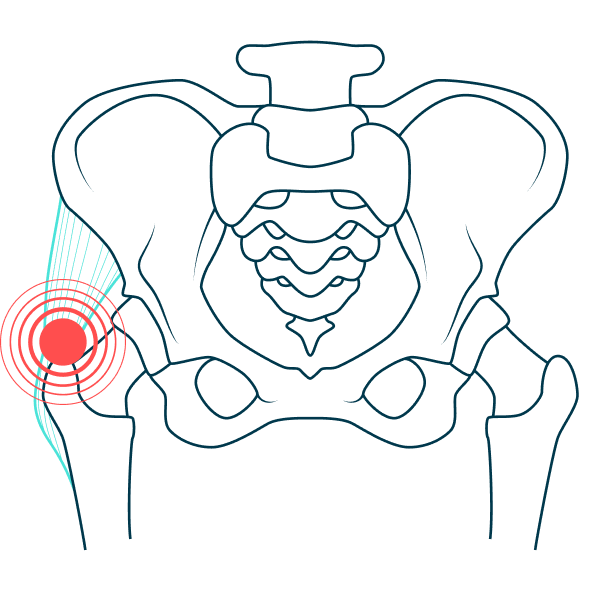
First of all, we will define what bursae are: they are serous or synovial bags found in various parts of the body (hips, shoulder, heels or knee) and whose main function is to act as “shock absorbers” for anatomical areas of special stress or mechanical conflict, thus avoiding excessive friction. Some hip injuries produce hip bursitis, which implies an inflammation of these structures producing significant and intense pain.
When referring to hip bursitis we can refer to several different ones:
- When we speak of those located around the greater trochanter (trochanteric bursitis) whose function is to allow the gluteus maximus tendon to slide with the tensor fascia lata muscle as it passes through the greater trochanter (lateral bony projection of the femur).
- The one located in the iliac psoas muscle, located in the internal part of the joint and whose pain is manifested in the inguinal region.
Of the two, trochanteric bursitis is the most common and therefore we will focus on it to provide information on the pathology as well as possible solutions from the field of pain treatment and physiotherapy.
Causes
The most common causes for the appearance of hip bursitis are usually repeated movements of the joint (sometimes accompanied by poor joint dynamics or neuromuscular imbalance) or sustained positions in which excessive and prolonged pressure is exerted on the bursa.
Other causes may be:
- Trauma to the area.
- Rheumatoid arthritis.
- Infections (commonly bacterial).
- Spinal disorders (scoliosis)
- Diabetes
- Inflammatory systemic pathologies.
Symptoms
The most common symptoms in trochanteric bursitis are:
- Pain: It is usually the most common symptom. In a first phase it is a sharp stabbing pain in the trochanter (extending towards the external region of the thigh), progressively it becomes a diffuse pain that can cover the entire area of the hip joint and buttocks. It usually increases after sitting for long periods of time and getting up, after walking long distances and when going up or down stairs. It makes it difficult to rest, since it is painful to sleep leaning on that side.
- Inflammation. Perceptible to palpation.
- Warmth in the area or redness.
- Functional limitation of the hip joint. sensation of stiffness.
Risk Factors
Anyone is susceptible to hip bursitis in their lifetime, however there are risk factors that can increase the risk:
- Age: older age usually increases the risk.
- Professions or sports activities: sports such as running, or professions such as dancing.
- Inadequate footwear.
- Weight.
- Muscle dysfunction in the lumbar or hip region: poor recruitment of the muscles responsible for this area can lead to excessive friction on the bursa in the medium term, triggering symptoms without previous trauma.


Our customers say


Insurance companies
Ask your MIVI centre for information on the agreements with insurance companies.